What Is a Portalet? A Complete Guide to Portable Toilets in the Philippines
If you have ever attended a construction project, outdoor event, concert, festival, sports event, or large gathering, you have probably seen a portalet.
But what exactly is a portalet, and why is it important?
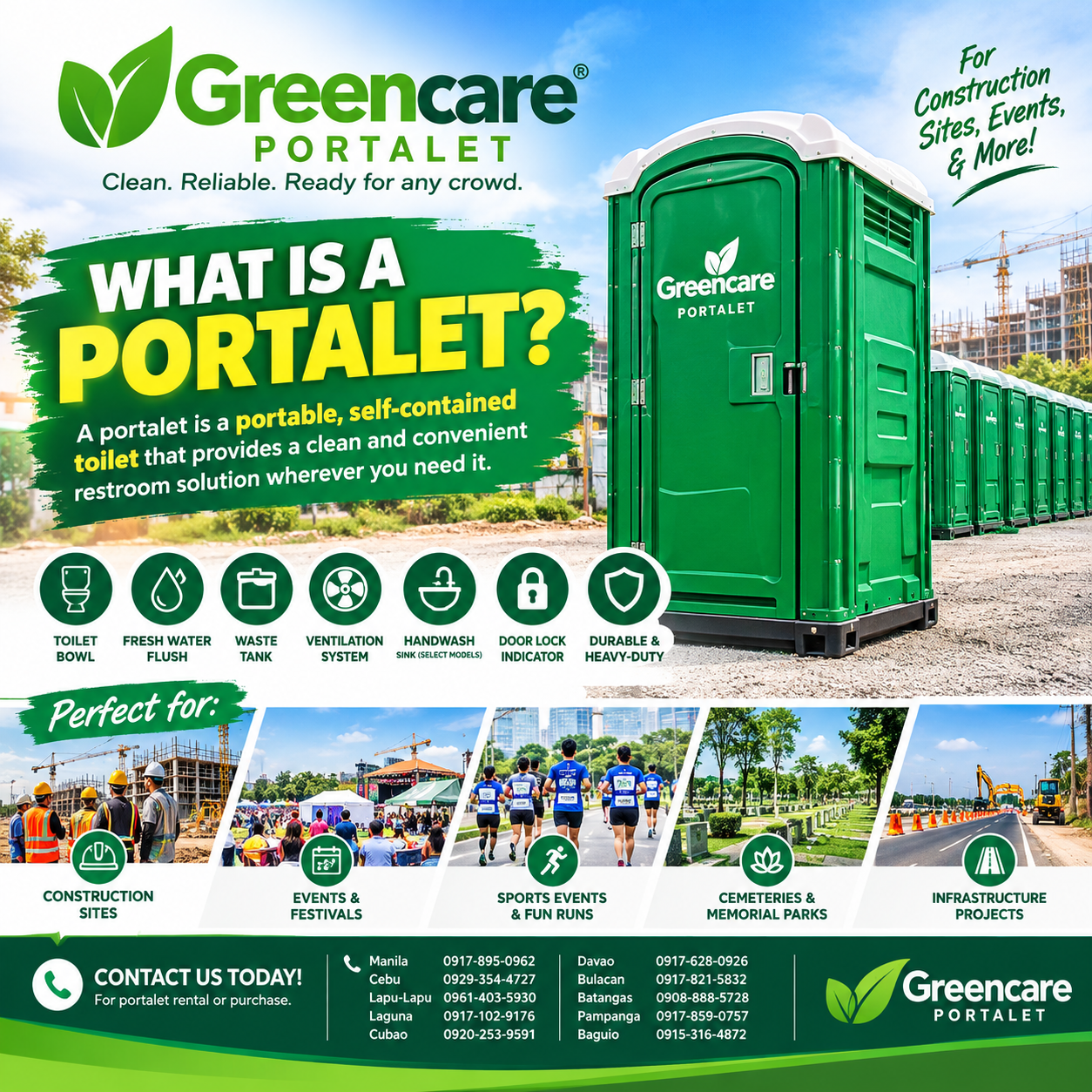
A portalet, also commonly called a portable toilet, is a movable, self-contained toilet facility designed to provide sanitation in places where permanent restroom facilities are unavailable, insufficient, or impractical.
Unlike a traditional bathroom connected to a building’s plumbing and sewer system, a portalet has its own waste-holding tank and can be transported, installed, cleaned, serviced, and relocated as needed.
What Does “Portalet” Mean?
The word portalet is commonly used in the Philippines to refer to a portable toilet.
A portalet is essentially a portable restroom that can be placed almost anywhere—construction sites, roads, parks, event venues, sports grounds, memorial parks, beaches, and other temporary locations.
Depending on the model, a portalet may include:
- Toilet bowl
- Waste-holding tank
- Fresh-water tank
- Flush system
- Urinal
- Ventilation system
- Tissue holder
- Door-lock indicator
- Handwashing sink
- Mirror
- Hooks and accessories
- Anti-slip flooring
Modern portalets are designed to be durable, hygienic, easy to maintain, and suitable for heavy use.
How Does a Portalet Work?
A typical portalet operates using a self-contained waste-management system.
When someone uses the toilet, waste goes into the holding tank located underneath the toilet compartment. Depending on the model, the toilet may use a recirculating or fresh-water flushing system.
The waste remains inside the tank until the portalet is serviced.
A professional portalet service provider uses a vacuum truck or appropriate sanitation equipment to remove the waste. The unit is then cleaned, sanitized, deodorized, and prepared for continued use.
This makes portalets particularly useful in locations without a conventional sewer connection.
Where Are Portalets Used?
Portalets are used in many different industries and situations.
1. Construction Sites
Construction workers may spend months or even years working at locations where permanent bathrooms are not yet available.
Portable toilets provide workers with convenient access to sanitation while construction is ongoing.
For large construction projects, multiple portalets may be required depending on the number of workers and project duration.
2. Outdoor Events
Concerts, festivals, bazaars, fairs, company events, and community celebrations can attract thousands of people.
Permanent restrooms may not be enough—or may not exist at the venue.
Portable toilets provide additional restroom capacity exactly where it is needed.
3. Sports Events and Fun Runs
Marathons, fun runs, cycling events, football tournaments, and other outdoor sporting events often require temporary sanitation facilities.
Strategically placing portalets near starting areas, finish lines, spectator areas, and activity zones can significantly improve the participant experience.
4. Cemeteries and Memorial Parks
During Undas, cemeteries and memorial parks can experience extremely high visitor volumes.
Temporary toilets can help accommodate the increased demand, particularly when existing restroom facilities are limited.
5. Roads and Infrastructure Projects
Road construction and infrastructure projects can take place far from existing buildings and public restrooms.
Portable toilets give workers access to sanitation without requiring construction of a permanent bathroom.
6. Emergency and Temporary Facilities
Portalets can also be deployed during emergencies, renovations, disasters, or situations where existing restroom facilities are temporarily unavailable.
What Is Inside a Portalet?
Although portalets may look simple from the outside, a properly designed unit contains several important components.
Waste Tank
The waste tank collects and stores wastewater and human waste until professional servicing.
Tank capacity varies depending on the portalet design.
Fresh-Water Tank
Some models have a dedicated fresh-water tank for flushing and handwashing.
Toilet and Flush System
Depending on the model, portalets may have different flushing configurations, including recirculating or fresh-water flush systems.
Ventilation
Ventilation helps control odors and improve airflow inside the unit.
Door Indicator and Lock
Many portalets feature a door indicator that shows whether the unit is occupied.
Urinal
Some portalet designs include a built-in urinal to improve capacity and convenience.
Handwashing Facilities
Higher-end units can include a sink, water tank, soap dispenser, mirror, and other hygiene accessories.
What Is the Difference Between a Portalet and a Regular Toilet?
The biggest difference is mobility and plumbing requirements.
Feature
Portalet
Regular Toilet
Portable
Yes
No
Requires permanent plumbing
Usually no
Yes
Waste storage
Built-in tank
Sewer/septic system
Can be relocated
Yes
No
Suitable for construction sites
Yes
Only with plumbing
Suitable for outdoor events
Yes
Limited
Installation
Fast
Requires construction/plumbing
A portalet is essentially a temporary or mobile sanitation solution, while a conventional toilet is normally part of a permanent building.
Should You Rent or Buy a Portalet?
The answer depends on how long you need the unit and how often you use it.
Portalet Rental
Rental is often ideal for:
- One-day events
- Concerts
- Weddings
- Fun runs
- Festivals
- Construction projects
- Temporary gatherings
- Seasonal requirements
Rental packages may include delivery, installation, cleaning, pumping, and servicing depending on the provider.
Portalet Purchase
Buying may make more sense for:
- Construction companies
- Event companies
- Long-term projects
- Government projects
- Cemeteries and memorial parks
- Industrial facilities
- Companies with recurring sanitation requirements
For businesses that regularly need portable toilets, owning units can provide greater control over availability and deployment.
How Many Portalets Do You Need?
There is no single number that works for every situation.
The number of portalets required depends on factors such as:
- Number of people
- Event duration
- Type of event
- Availability of existing toilets
- Worker population
- Alcohol consumption
- Venue layout
- Cleaning frequency
- Local requirements
A professional portalet supplier can assess your expected crowd or workforce and recommend an appropriate number of units.
For major events, it is generally better to plan sanitation capacity in advance rather than wait until the venue is already crowded.
How Often Should a Portalet Be Cleaned?
Cleaning frequency depends on usage.
A portalet used by a small construction crew may require a different servicing schedule than a unit serving thousands of event attendees.
Professional servicing typically includes:
- Pumping out the waste tank
- Cleaning the toilet compartment
- Washing and disinfecting surfaces
- Replenishing water and supplies
- Checking the unit for damage
- Deodorizing the unit
- Inspecting locks, doors, and accessories
For high-volume events, more frequent cleaning and pumping may be necessary.
What Makes a Good Portalet?
Not all portable toilets are the same.
When choosing a portalet, consider:
Durability – The unit should withstand frequent transportation and heavy usage.
Capacity – Larger tanks can be useful for high-traffic applications.
Ventilation – Good ventilation improves comfort and odor control.
Hygiene – Regular professional cleaning and sanitation are essential.
Safety – Anti-slip floors, secure doors, proper locks, and stable construction are important.
Accessibility – Consider whether you need PWD-accessible or larger units.
Service support – A reliable supplier should be able to provide delivery, cleaning, pumping, maintenance, and emergency support.
Portalets in the Philippines
In the Philippines, portalets are increasingly important because many projects and events take place in locations where permanent sanitation infrastructure is limited.
From Metro Manila construction sites to provincial infrastructure projects, concerts, fun runs, festivals, schools, cemeteries, and large public gatherings, portable toilets provide a practical way to increase restroom capacity.
The key is not simply having a portalet—it is having a clean, properly maintained, properly positioned, and regularly serviced portalet.
Why Choose Greencare Portalet?
Greencare Portalet provides portalet solutions for construction projects, events, outdoor activities, businesses, and large gatherings.
Greencare offers portalet sales and rental, with service coverage in multiple locations across the Philippines.
Depending on your requirements, available solutions can include standard HDPE portalets, premium units, PWD-accessible portalets, urinals, and other temporary sanitation facilities.
For large projects and events, Greencare can help with delivery, deployment, cleaning, sanitation, pumping, and ongoing servicing.
Frequently Asked Questions About Portalets
What is a portalet?
A portalet is a portable, self-contained toilet that can be transported and installed in locations without permanent restroom facilities.
Is a portalet the same as a portable toilet?
Yes. “Portalet” is a commonly used term in the Philippines for a portable toilet.
Does a portalet need plumbing?
Generally, no. A portalet is designed with its own waste-holding system, allowing it to operate without a permanent sewer connection.
How long can a portalet be used?
A portalet can be used for short-term events or long-term projects, provided that it receives appropriate cleaning, pumping, and maintenance.
Can portalets be used for construction sites?
Yes. Construction sites are among the most common applications for portable toilets.
Can I rent a portalet for one day?
Yes. Portalet rental is commonly used for events, fun runs, festivals, weddings, and other short-term activities.
Can I buy a portalet?
Yes. Businesses, contractors, event organizers, and organizations can purchase portable toilets for repeated or long-term use.
Are there PWD-accessible portalets?
Yes. Specialized accessible portable toilets are available with larger interior spaces and features designed to accommodate wheelchair users.
Conclusion: A Portalet Is More Than Just a Portable Toilet
A portalet may look like a simple temporary restroom, but it plays an important role in public sanitation, construction, events, infrastructure projects, and emergency situations.
Whether you need one portable toilet for a private event or hundreds of units for a major construction project or large-scale gathering, choosing the right supplier and maintaining the units properly are critical.
Need portalet rental or purchase in the Philippines?
Choose a supplier that can provide not only the units, but also the delivery, cleaning, sanitation, pumping, maintenance, and service support your project requires.
📞 Contact Greencare Portalet
📍 Manila – 0917-895-0962
📍 Cebu – 0929-354-4727
📍 Lapu-Lapu – 0961-403-5930
📍 Laguna – 0917-102-9176
📍 Cubao – 0920-253-9591
📍 Davao – 0917-628-0926
📍 Bulacan – 0917-821-5832
📍 Batangas – 0908-888-5728
📍 Pampanga – 0917-859-0757
📍 Baguio – 0915-316-4872
Greencare Portalet — Clean. Reliable. Ready for any crowd.
#Portalet #PortableToilet #PortaletRental #PortaletForRent #PortableToiletPhilippines #PortaletPhilippines #GreencarePortalet #ConstructionPortalet #EventPortalet #ToiletRentalPhilippines

